Why does overcrowding a pan stop food from browning?
Browning needs enough heat at the food's surface and a path for moisture to leave.
When too much food goes into one pan, it releases moisture faster than the pan can drive it away. The surface environment stays wetter and cooler, so you get more steaming and less of the dry, high-heat conditions that favour browning.
BROWNING ↓
THE PAN IS A CAPACITY SYSTEM.
a bandwidth.
What actually changes when the pan is overcrowded?
More food releases more water vapour while also pulling heat from the pan. If moisture cannot escape quickly, the surface stays wetter and the pan spends more time behaving like a steam environment.
pan.
More moisture release + larger thermal load.
wins.
Surface stays wetter, temperature recovery slows, browning takes longer.
How do I get better browning without buying a bigger pan?
Dry the food, preheat properly, leave visible space between pieces and cook in batches when necessary.
Dry the surface.
Surface water has to leave before strong browning can take over.
Keep capacity.
Leave enough exposed pan and airflow for moisture to escape rather than pool.
Batch it.
Two fast batches can brown better than one overloaded batch that steams for longer.
What is the deeper cooking rule behind this?
Heat transfer, water activity, surface moisture and temperature are interacting. Browning is not a timer setting; it is an environment.
The Maillard reaction is influenced by temperature and moisture. Dry-heat conditions favour the browned flavours people are usually trying to create.
Know why.
Then change the move.
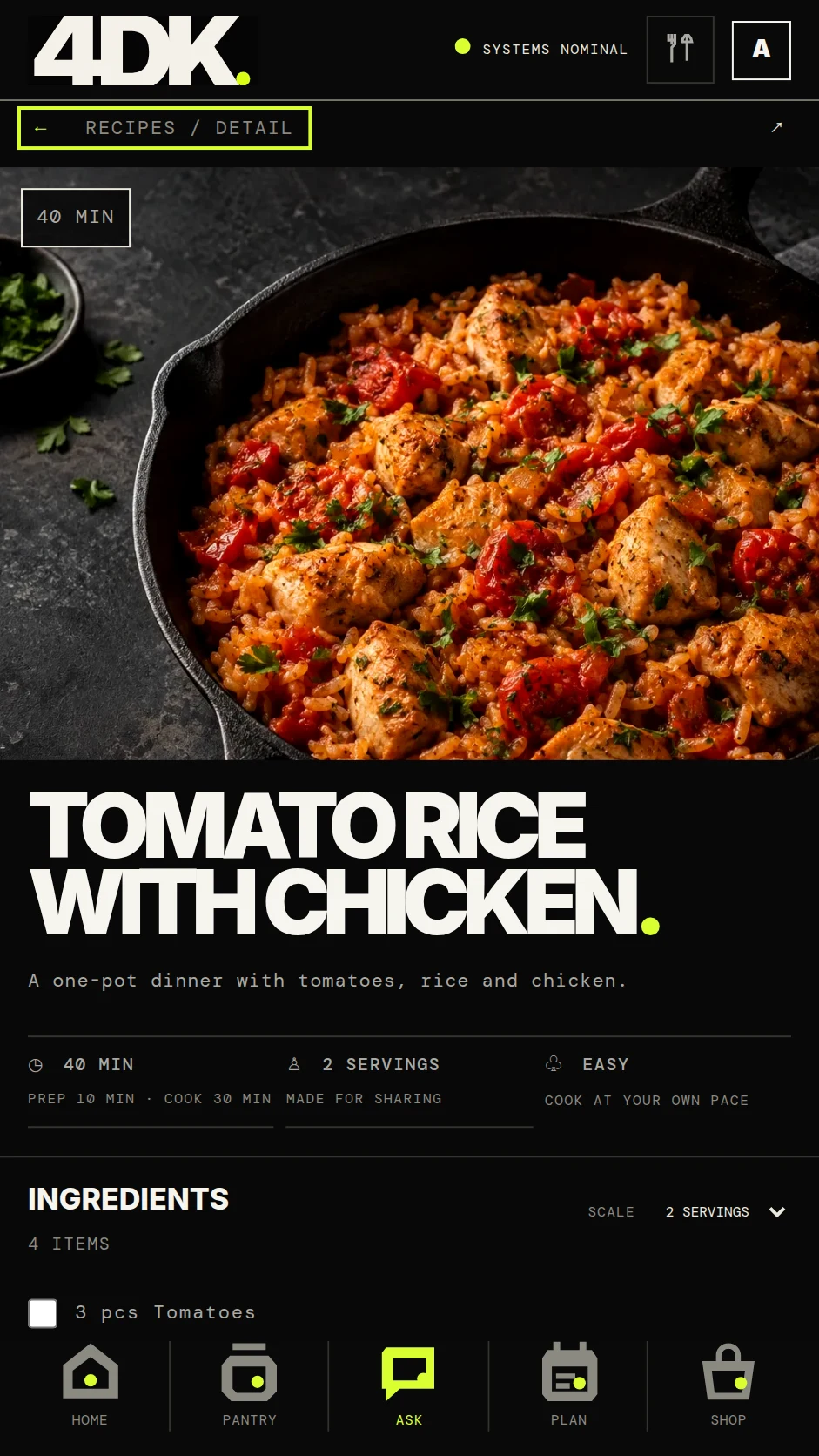
A cooking guide becomes more useful when it can explain why a step matters and adapt the instruction to pan size, quantity and ingredient state.
Ask 4DK while cooking →What questions naturally fan out from browning?
Drying, pan temperature, Maillard chemistry, batch size and when to flip are all useful supporting routes.
ScienceDirect Topics: Maillard reaction overview
Serious Eats: Introduction to the Maillard reaction