Fire changes flavour.
Live-fire cooking can add smoke that a clean electric or gas hob will not create in the same way.
 Kitchen intelligenceSign inStart cooking
 Jollof is bigger than one country, and Nigerian jollof is bigger than “rice with tomato.” The useful story is where the dish sits in West Africa, how Nigerians make it their own, and why party jollof became a cultural reference point.
Nigerian jollof is one national expression of a wider West African rice tradition. It is typically built around rice cooked in a concentrated tomato, pepper and onion base, with seasoning and technique varying by cook. In Nigerian party culture, a smoky version cooked in large batches has become especially iconic.
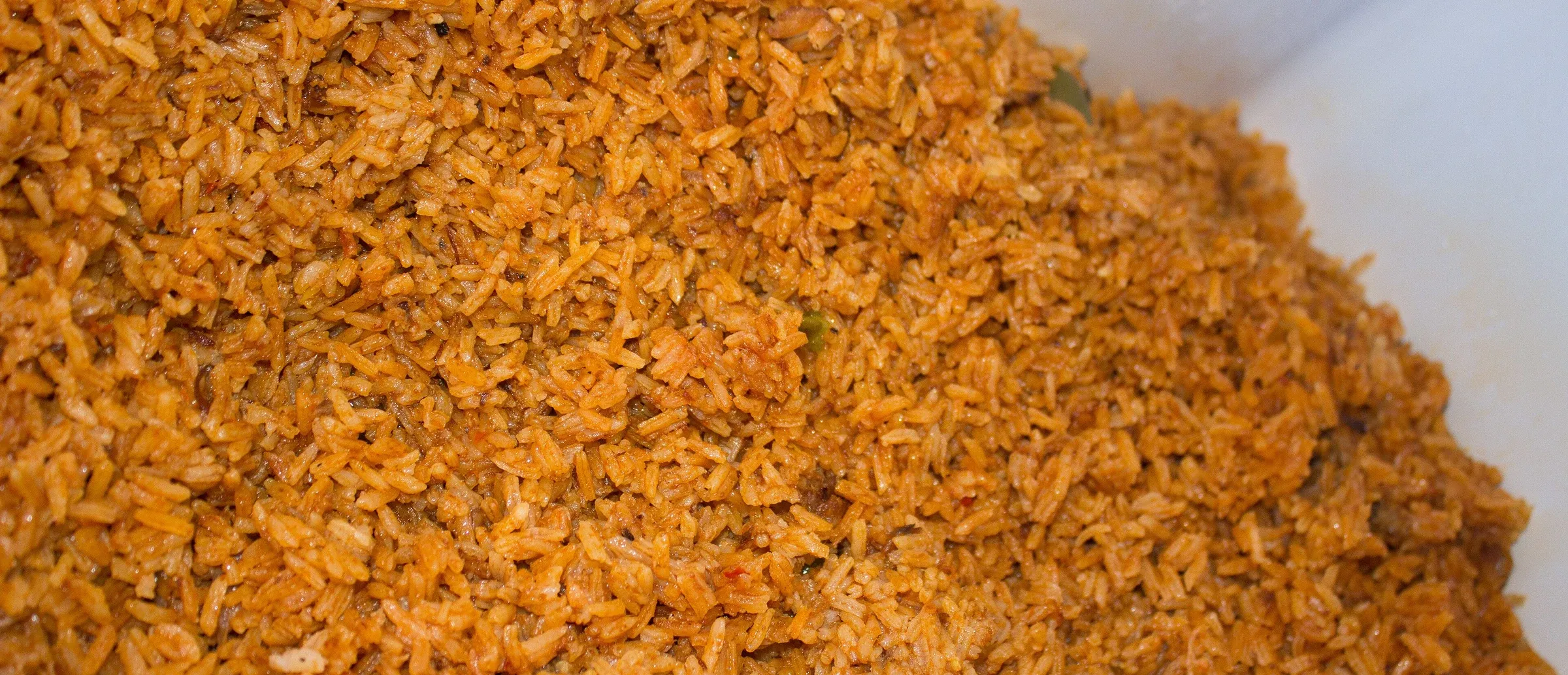
It is rice cooked into a seasoned tomato-pepper base until the grains take on the sauce rather than simply sitting underneath it. Nigerian versions vary by household, event and cook; there is no single pot that represents every Nigerian kitchen.
Common flavour directions include tomato, onion, pepper, chilli, thyme, curry powder, bay leaf and stock or seasoning cubes, but recipes differ widely. The point is not to flatten those variations into a single “authentic” formula.
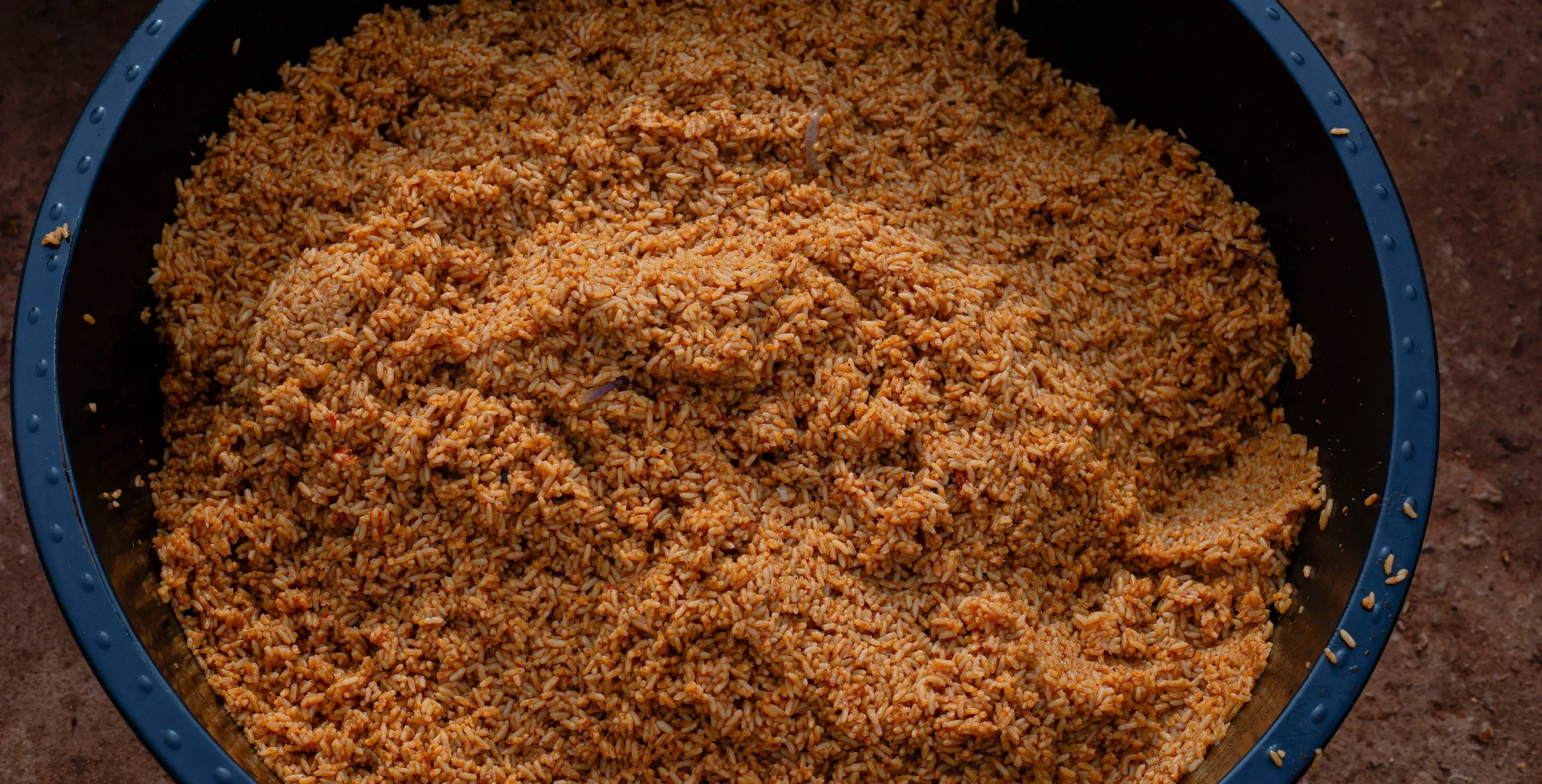
National Geographic describes Nigerian parties as places where the smell of smoky, sweet jollof and fried plantain is likely to meet you early. That matters because jollof is not only an everyday meal; it is also tied to gatherings and celebration.
Saveur describes jollof as a West African dish that crosses borders and carries ideas of home and connection. Nigerian cooking is one branch of that wider story, not the whole story.
Traditionally, cooking over live fire can introduce smoke directly. Home cooks also recreate some of that character by letting the rice develop deeper toasted notes near the bottom of the pot or by roasting parts of the tomato-pepper base.
Live-fire cooking can add smoke that a clean electric or gas hob will not create in the same way.
Some cooks deliberately allow controlled browning near the base of the pot to deepen flavour without turning the whole batch burnt.
Party jollof is often cooked in large pots for weddings, birthdays and other gatherings. Technique changes when you are feeding dozens or hundreds rather than four.
Nigerian jollof is Nigerian; jollof itself is a wider West African tradition. Senegalese thieboudienne is often described as an important precursor to modern jollof, with roots among the Wolof people, while Nigeria, Ghana, Sierra Leone, Gambia and other countries have developed their own versions.
That is why “who owns jollof?” is a worse cultural question than “how did this shared rice tradition become different things in different places?”
Rice, tomato-based cooking, regional trade, migration and neighbouring food traditions all matter more than modern borders alone.
Party cooking, smoky flavour, local seasoning habits, household memory and celebration culture make Nigerian jollof recognisable without claiming it is the only “real” version.

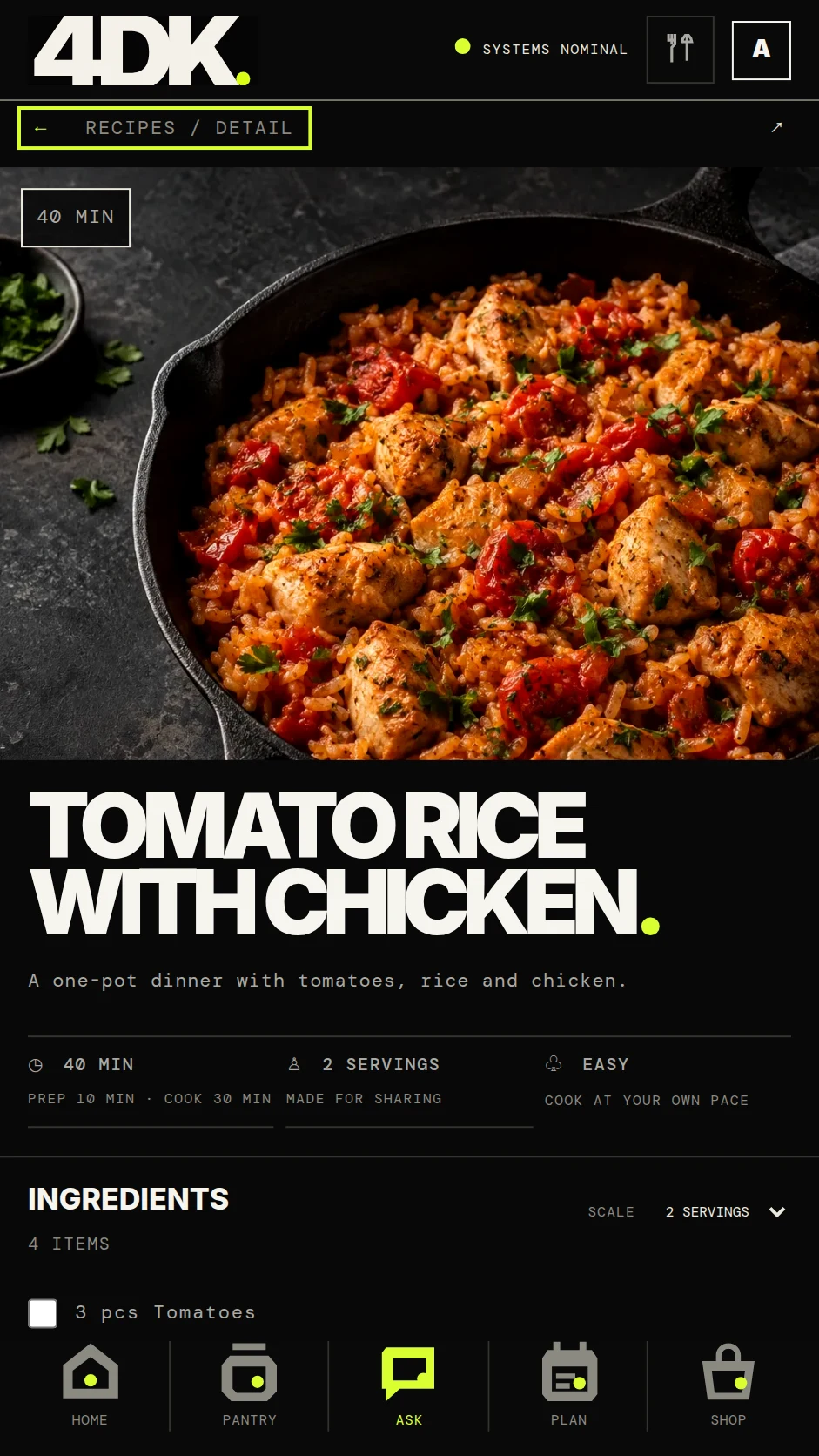
4DK should not reduce jollof to a generic “tomato rice” tag. A cultural knowledge layer can preserve local names, technique, common ingredients, substitutions, preparation style and context, while Pantry and Location decide what is actually realistic in a user's kitchen.
Ask 4DK with your kitchen →Explore the recipes, storage advice and kitchen techniques behind the story.