What should I cook with spinach before it goes bad?
Freshness is not a recipe category. It is a prioritization signal.
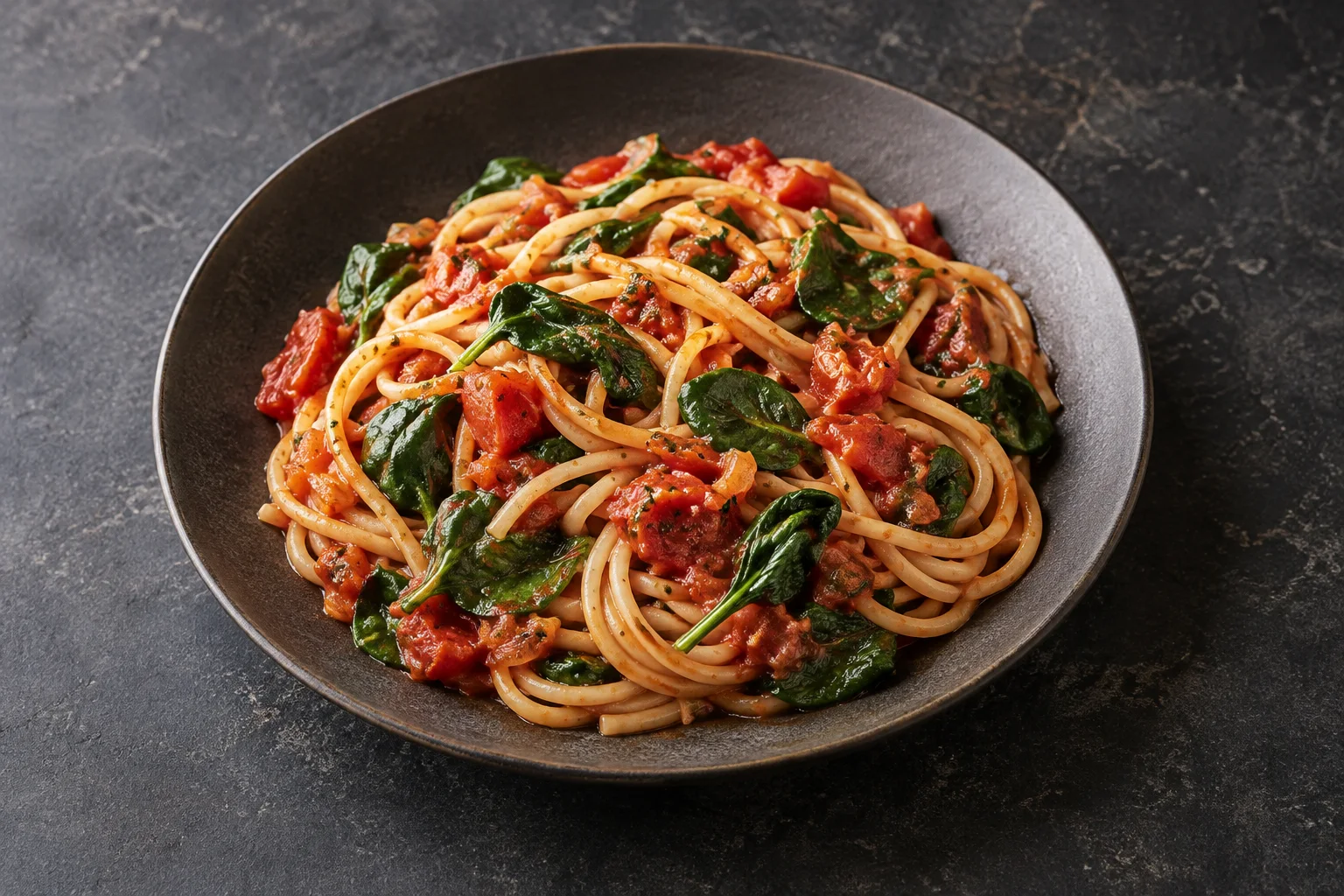
If the spinach is still sound but needs using soon, choose a meal that collapses a large volume quickly: stir-fry it, fold it into eggs, cook it into soup or stew, or add it to a rice/pasta dish near the end. If it is slimy, sour-smelling or clearly spoiled, do not try to rescue it.
beats someday.
How should freshness change what I cook?
Treat freshness as a state, not a fake exact countdown. The closer an ingredient is to losing quality, the more heavily it should influence the meal.
What kinds of meals use a lot of spinach quickly?
Cooked applications are useful because spinach reduces dramatically in volume, letting a large handful or bag disappear into one meal.
Eggs + spinach.
Wilt spinach first, then fold it into scrambled eggs, omelette or a frittata-style pan meal.
Rice or noodles.
Add spinach near the end so it wilts without being cooked into nothing.
Soup or stew.
A pot meal can absorb a large quantity quickly and can be portioned for later.
When should I stop trying to rescue spinach?
If the leaves are slimy, mushy, strongly off-smelling or otherwise clearly spoiled, discard them rather than trying to cook the problem away.
USDA guidance emphasizes refrigeration for perishable foods and using FoodKeeper for storage-time guidance. Storage time is context, not proof that food is safe.
The date should change
what comes next.
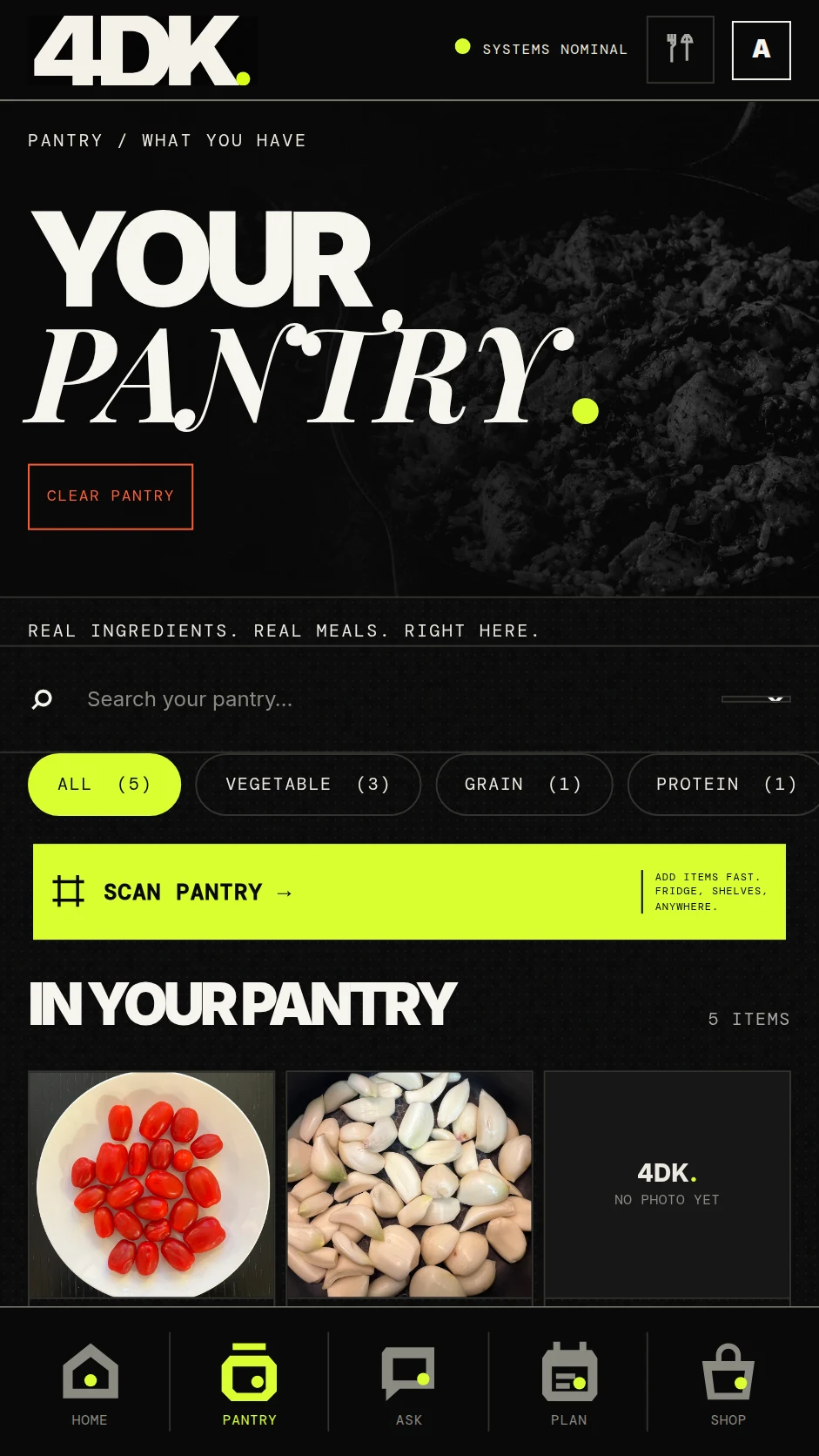
Freshness becomes useful when it can actually influence Pantry, Ask, Plan and Shop instead of living as an isolated countdown.
Let 4DK prioritize what to use →What should freshness questions lead to next?
The useful fan-out is storage, visible condition, freezing, cooked-leftover timing and meals that use the ingredient efficiently.
USDA FSIS: What foods are perishable?
FoodSafety.gov: Cold Food Storage Chart / FoodKeeper