
What should a meal planning app actually do?
A meal planner is not useful because it can fill seven boxes with recipe names. It is useful if the plan survives contact with a real kitchen.
Look for four things: pantry awareness, easy replanning, household context and shopping-list connection. If the app cannot account for what you already have or what changes midweek, it is mostly a calendar with recipes attached.
the system should too.
Which meal-planning features actually reduce work?
The best features remove repeated decisions and duplicate data entry instead of adding more planning chores.
Pantry-aware
The plan knows what you already have and can use it before suggesting more shopping.
Easy to change
Skipping Tuesday should not destroy the entire week.
Household-aware
Different people can share kitchen state without becoming one generic profile.
Shopping-connected
The shopping list should be the delta between the plan and what is already available.
What makes a meal-planning app feel like more work?
Manual inventory maintenance, rigid weekly schedules and recipe dumping are warning signs if your goal is fewer decisions.
How should I compare meal-planning apps before choosing one?
Compare the workflow you repeat every week: decide meals → check what you have → shop → cook → change plans → remember what worked.
Not seven boxes.
One kitchen loop.
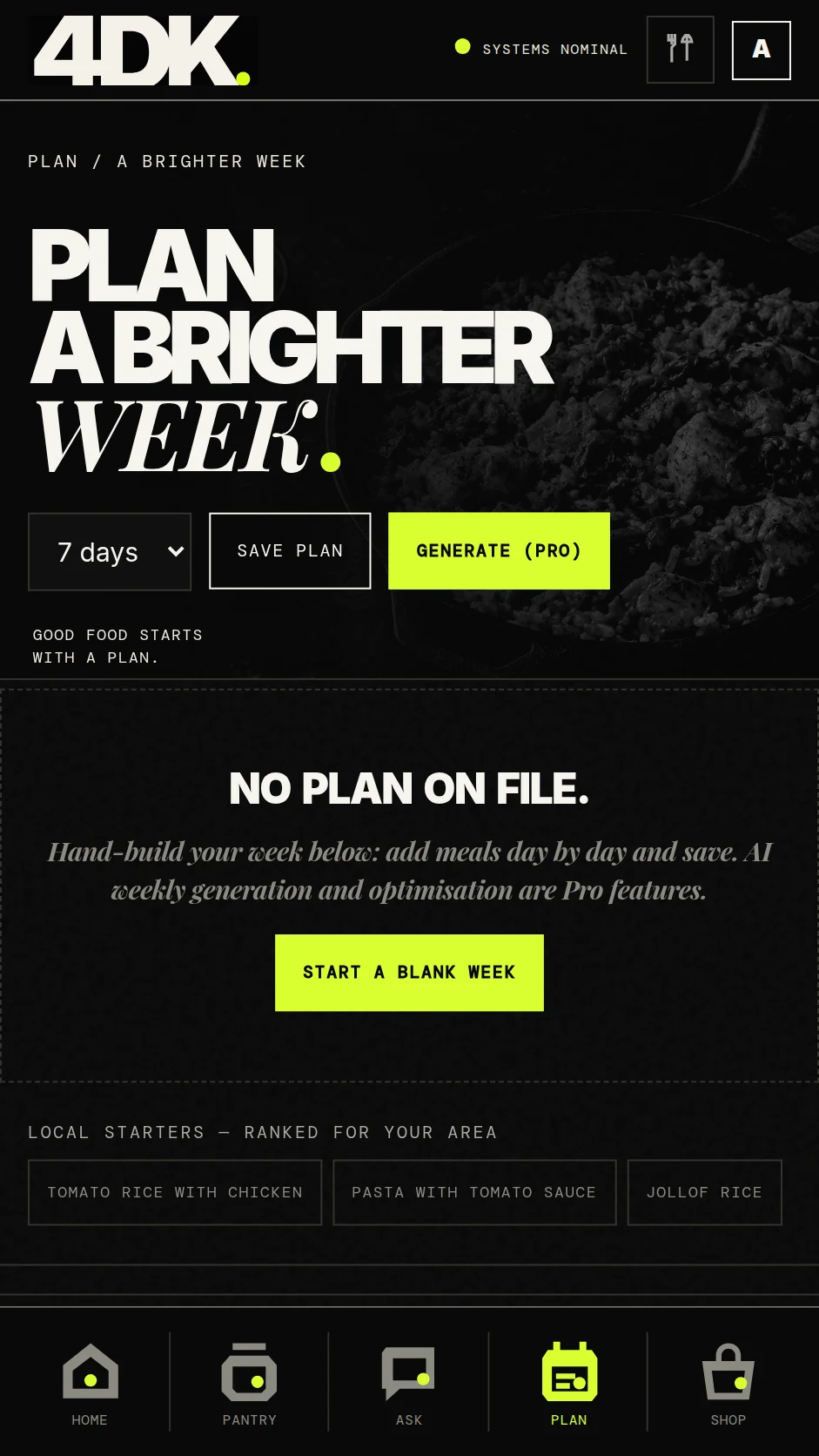
4DK's Plan is meant to sit downstream of Pantry, Freshness, Ask and The House, then feed Shop. Planning should be connected context, not an isolated calendar.
See how 4DK plans →What do prospective buyers search after “meal planning app”?
They usually narrow into free vs paid, family use, grocery-list connection, pantry tracking and whether the app reduces or increases setup work.